November 18, 2026
Understanding the significance of professional care is crucial for maintaining safety and preventing catastrophic property hazards. Trees are an essential part of our environment, but they can pose severe risks if neglected or damaged. Professional tree removal ensures that compromised specimens are systematically assessed and dismantled without damaging structures or endangering human lives. By relying on certified specialists, property owners gain the expertise and technical equipment required to handle large timber safely. Making informed decisions regarding tree removal protects your home, your family, and the surrounding community.
Recognizing Critical Safety Hazards of Compromised Trees
Unmaintained timber poses silent dangers that many homeowners fail to detect until severe weather strikes. Internal fungal rot, hollowed trunks, and weak branch unions frequently compromise a tree's weight-bearing capacity. These structural defects significantly increase the likelihood of whole-tree failure during seasonal storms. Certified specialists conduct thorough risk assessments to evaluate whether structural bracing can salvage the specimen or if immediate tree removal represents the only safe course of action. Identifying hidden root rot and trunk decay early prevents catastrophic impacts on nearby homes, vehicles, and pedestrians.
Managing Property Boundaries and Structural Vulnerabilities
Overgrown canopies and unstable root zones can cause severe structural damage across property lines. Heavy limbs extended over rooflines drop debris, scour shingles, and risk puncturing attics during standard wind events. Furthermore, extensive root systems can shift foundations, crack underground pipes, and lift concrete sidewalks. When neighboring trees begin leaning dangerously toward boundary lines, proactive tree removal eliminates contentious property disputes and prevents costly homeowner insurance claims. Professional crews safely dismantle large limbs in tight spaces, preserving surrounding architectural structures.
Mitigating Falling Limb Hazards
Deadwood in the upper canopy is commonly referred to in the arboricultural industry as widow-makers due to its unpredictable nature. Dry, brittle limbs can snap and fall without warning, even on calm, sunny days. Regular crown thinning and pruning by licensed arborists help identify these dead limbs before they fall on parked cars, play areas, or pedestrians. When crown dieback exceeds safe restoration thresholds, full tree removal becomes necessary to secure ground-level safety.
Preventing Electrical and Utility Fires
Vegetation encroaching on utility rights-of-way creates extreme fire and electrocution hazards. Tree branches touching high-voltage electrical lines can conduct current, triggering ground faults, sudden explosions, and structural fires. In dry seasons, these electrical arcs can ignite catastrophic neighborhood wildfires. Utility companies and certified arborists coordinate closely to monitor clearance zones, relying on targeted tree removal to eliminate hazardous growth around energized power lines before severe weather triggers widespread blackouts.
Eliminating Pedestrian and Walkway Obstacles
Decaying trees near urban walkways present severe liabilities for property managers and municipalities. Surface root flares frequently buckle public sidewalks, creating tripping hazards that lead to premises liability lawsuits. Furthermore, low-hanging foliage impairs line-of-sight visibility for motorists at roadway intersections. Strategic pruning and targeted tree removal keep public access paths fully accessible, compliant with municipal safety codes, and safe for community use.
Navigating Legal Liabilities and Regulatory Compliance
Adhering to Municipal Codes and Permits
Urban and suburban tree canopies are heavily regulated by municipal tree preservation ordinances. Property owners cannot simply cut down mature trees without checking local bylaws, historic district rules, and environmental protection guidelines. Unauthorized cutting can result in severe municipal penalties, legal injunctions, and mandatory replanting costs. Professional companies understand these local regulations and secure all required permits prior to beginning tree removal, ensuring property owners remain fully compliant with all municipal codes.
Understanding Property Owner Liability
Property owners owe a duty of reasonable care to visitors, tenants, and neighbors. If an owner neglects an obviously dead or rotting tree that subsequently collapses, insurance investigators and courts will likely deem the event a foreseeable hazard rather than an unavoidable natural disaster. Under premises liability laws, documented negligence can leave the homeowner personally responsible for extensive medical expenses and structural repair bills. Hiring certified arborists for timely tree removal produces a defensible record of responsible property maintenance.
Securing Favorable Insurance Outcomes
Insurance providers scrutinize maintenance records whenever falling timber causes substantial structural damage. If evidence reveals long-standing neglect, insurers may deny the claim or exclude tree damage from future policy renewals. Conversely, maintaining a documented history of preventive care and professional tree removal protects your coverage and accelerates the claims process following major storms, ensuring your insurer covers policy claims promptly.
Protecting Environmental Health and Managing Debris
Diagnosing Pathogens and Wood Rot
Assessing forest health involves recognizing microscopic fungal networks, bacterial cankers, and vascular diseases. A certified arborist evaluates whether a distressed tree can recover through soil remediation and deep-root fertilization or whether structural decline is irreversible. According to the U.S. Bureau of Labor Statistics, the specific sector providing the most jobs for this profession is Services to Buildings and Dwellings, which accounts for 44,520 workers. These specialists apply extensive training in tree anatomy to determine the safest management plan for your landscape.
Disposing of Wood Waste Responsibly
The job is not complete when the timber reaches the ground; disposing of heavy trunk rounds and branch debris requires specialized machinery. Leaving large brush piles invites wood-boring pests, termites, and fire hazards. Commercial crews use high-capacity wood chippers to turn branches into beneficial garden mulch and transport heavy trunk sections for lumber repurposing or firewood processing. This clean, sustainable cleanup keeps the landscape neat, tidy, and free of biohazards.
Utilizing Professional Arboricultural Expertise and Equipment
Applying Advanced Technical Rigging
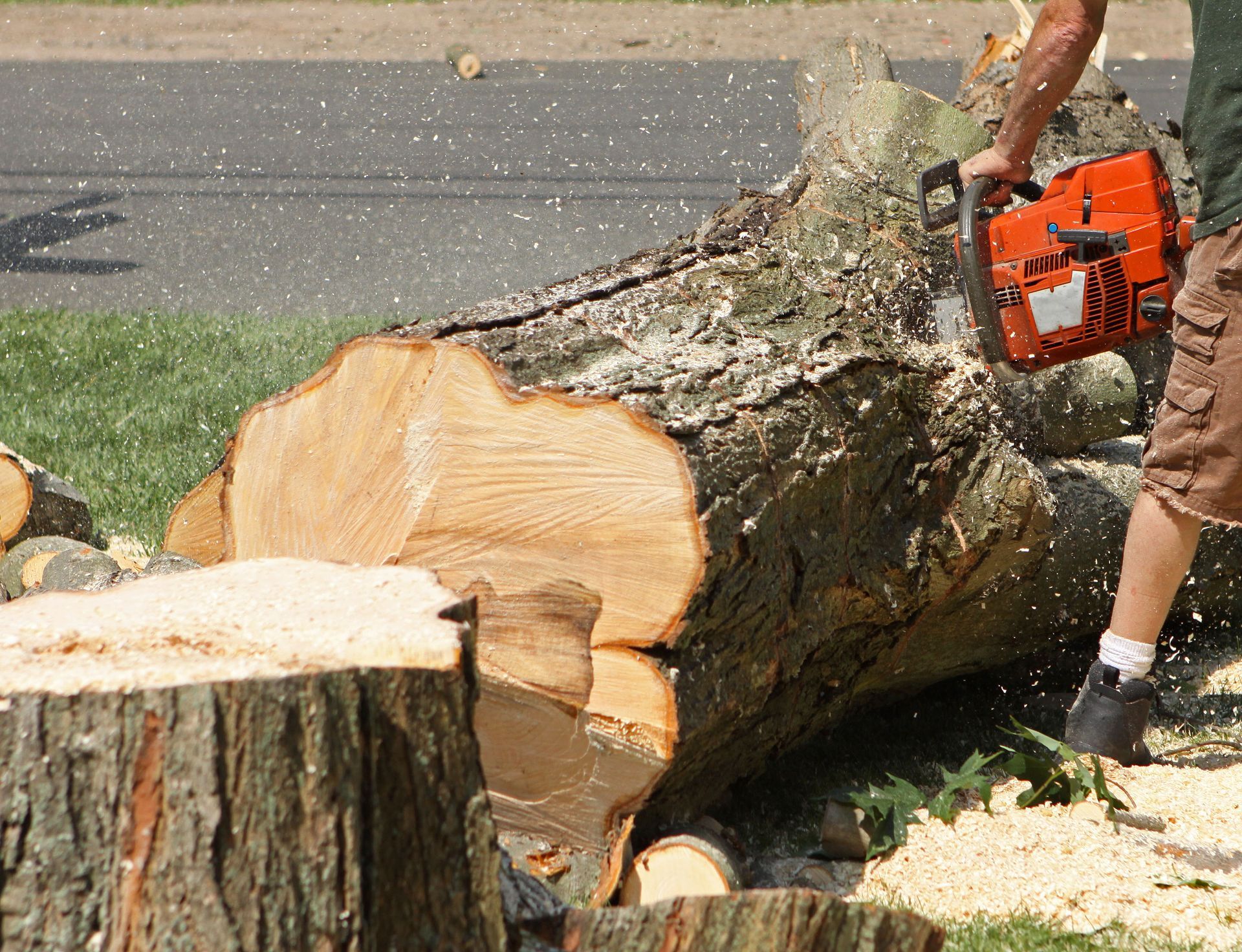
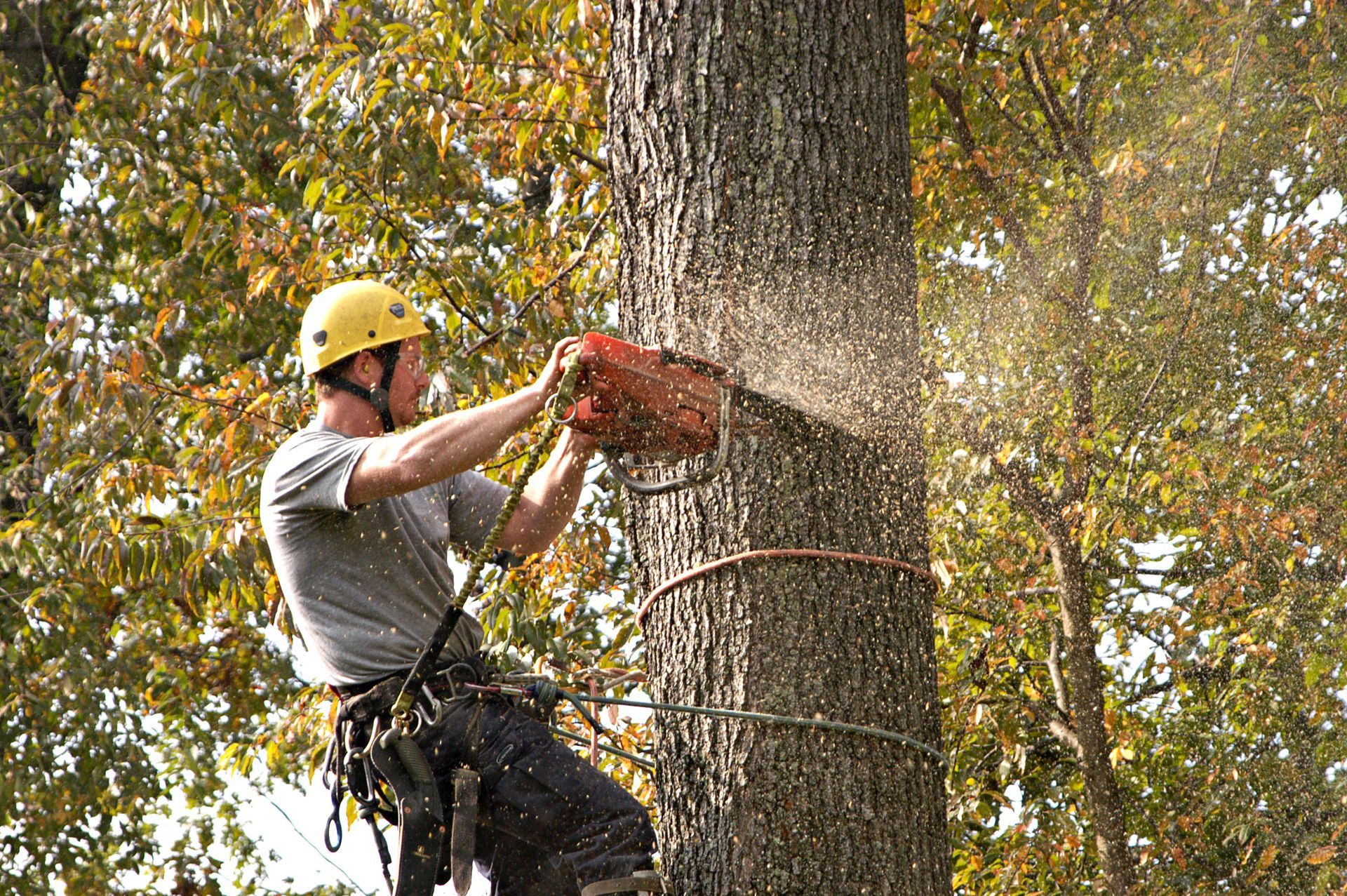
Safely dismantling a massive tree in close proximity to residences requires precise physical engineering and specialized rigging hardware. Arborists calculate green wood weight, wind resistance, and fall angles before making a single cut. Using dynamic rigging lines, friction brakes, and pulleys, technicians safely lower multi-ton trunk sections into tight spaces without disturbing underlying gardens, driveways, or structures. Attempting this complex rigging work without professional training frequently results in catastrophic dropped loads.
Deploying Heavy Machinery Safely
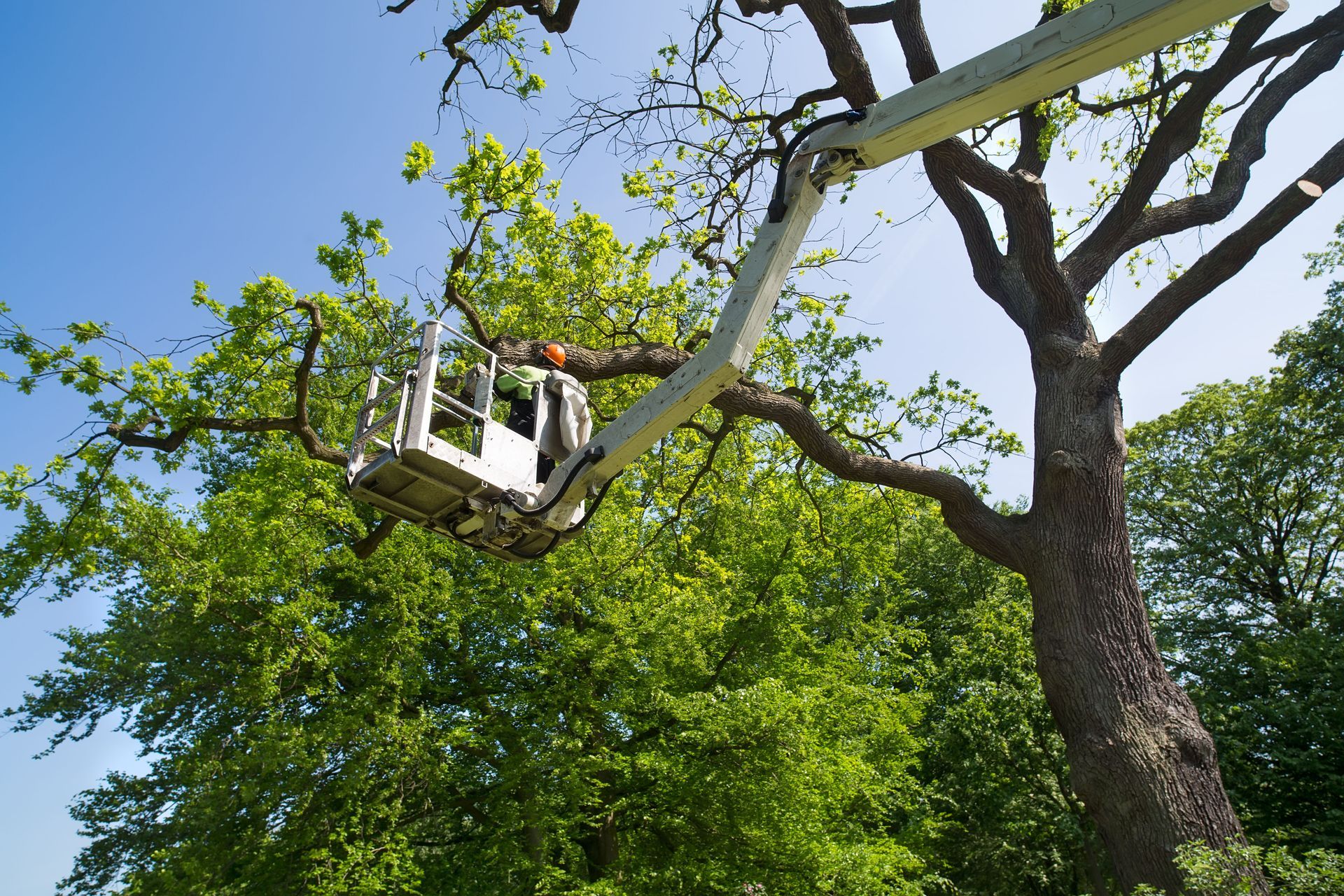
Modern arboriculture relies on specialized industrial equipment to manage complex extractions. Professional teams deploy truck-mounted cranes, bucket lifts, hydraulic winches, and stump grinders to tackle hazards that are inaccessible to standard homeowner tools. Utilizing commercial machinery for tree removal minimizes dangerous physical climbing on structurally compromised timber, allowing the crew to dismantle unstable canopies safely and efficiently.
Managing Crisis Storm Scenarios
Severe hurricanes, tornadoes, and ice storms create volatile structural damage across urban canopies. Storm-damaged limbs often hold intense internal compression and tension, which can kick back violently when cut by an untrained operator. Certified emergency response crews are specifically trained in hazardous wood physics, allowing them to release stored wood tension safely and clear fallen trees from homes, roads, and utilities without causing secondary damage.
Maximizing Cost Efficiency and Time Savings
While some view DIY tree cutting as an opportunity to save money, it often leads to emergency room visits, crushed vehicles, punctured roofs, and costly insurance deductibles. Professional tree removal companies complete high-risk tasks efficiently and safely, carrying comprehensive general liability and workers' compensation coverage to protect homeowners from financial risk. Entrusting hazardous work to certified contractors saves substantial time and provides long-term financial security.
Maintaining safety on any property requires striking a balance between environmental preservation and proactive hazard management. While mature trees enhance residential value, aesthetic appeal, and community well-being, neglecting structurally unsound specimens can quickly result in devastating property loss, expensive legal liabilities, and catastrophic physical injuries. Entrusting your landscape evaluations to certified arborists guarantees that each specimen receives the scientific care, structural support, or timely intervention it requires. When decay compromises internal structural integrity, choosing certified tree removal remains the safest, most responsible decision for protecting your home, your family, and your community. Contact Greens Tree Service today to learn more.